

Hey there! As a supplier of Industrial Ceramic Parts, I often get asked about the precision levels achievable in industrial ceramic part manufacturing. So, I thought I'd take a deep - dive into this topic and share some insights with you.
Understanding the Basics of Industrial Ceramic Parts
First off, let's talk a bit about industrial ceramic parts. These parts are used in a wide range of industries, from aerospace to electronics, because of their unique properties. They can be Wear Resistant Ceramic Parts, which are great for applications where there's a lot of friction, or Heat Resistant Ceramic Parts, perfect for high - temperature environments. There are also Corrosion Resistant Ceramic Parts that can withstand harsh chemicals.
The precision of these parts is crucial. In industries like aerospace, even the slightest deviation from the required specifications can lead to serious problems. So, what kind of precision levels can we actually achieve?
Factors Affecting Precision in Manufacturing
There are several factors that play a role in determining the precision of industrial ceramic parts.
Material Properties
The type of ceramic material used has a big impact. For example, Zirconia Ceramic Parts have different properties compared to other ceramics. Zirconia is known for its high strength and toughness, which can affect how precisely it can be machined. Some ceramics are more brittle, and this can make it challenging to achieve very high precision during the manufacturing process.
Manufacturing Processes
The manufacturing processes also matter a great deal. There are different ways to make industrial ceramic parts, such as molding, machining, and sintering.
Molding is often used to create the basic shape of the part. The precision of the mold itself is important. If the mold has any imperfections, those will be transferred to the part. For example, in injection molding, the accuracy of the injection system and the mold cavity design can determine how close the final part is to the desired dimensions.
Machining comes into play when more precise shaping is needed. Processes like grinding and milling can be used to achieve very tight tolerances. However, the quality of the machining equipment and the skill of the operator are key. High - end CNC (Computer Numerical Control) machines can offer better precision, but they also require experienced operators to get the best results.
Sintering is the process of heating the ceramic part to a high temperature to make it dense and strong. The temperature control and the duration of the sintering process can affect the final dimensions of the part. If the temperature is not uniform or if the sintering time is off, the part may shrink or expand in an unpredictable way, reducing the precision.
Achievable Precision Levels
So, what are the actual precision levels we can expect?
In general, for simple shapes and less demanding applications, we can achieve dimensional tolerances in the range of ±0.1 mm to ±0.5 mm. This level of precision is suitable for many general - purpose industrial ceramic parts, like some Industrial Ceramic Components used in machinery.
For more complex and high - precision applications, such as those in the semiconductor or medical industries, we can push the tolerances down to ±0.01 mm or even lower. However, achieving these ultra - high precision levels is not easy. It requires state - of - the - art equipment, strict quality control measures, and a lot of expertise.
Let's take the example of a small zirconia ceramic part used in a medical device. The part needs to have very precise dimensions to fit correctly and function properly. By using advanced machining techniques and high - quality materials, we can achieve a dimensional tolerance of ±0.005 mm. This kind of precision ensures that the part will work as intended and meet the strict requirements of the medical industry.
Quality Control and Assurance
To ensure that the precision levels are met, quality control is essential. We use a variety of methods to check the dimensions and properties of the industrial ceramic parts.
Dimensional inspection is one of the most important steps. We use tools like calipers, micrometers, and coordinate measuring machines (CMMs). CMMs are especially useful for complex parts as they can measure multiple dimensions with high accuracy.
We also test the mechanical properties of the parts, such as hardness and strength. This helps us make sure that the parts not only meet the dimensional requirements but also have the right performance characteristics.
In addition to in - house testing, we often work with third - party laboratories for more comprehensive testing. This provides an extra layer of assurance that the parts are of high quality and meet the required precision levels.
Meeting Customer Requirements
As a supplier, our goal is to meet the specific requirements of our customers. If a customer needs a part with a very high precision level, we'll work closely with them to understand their needs and develop a manufacturing plan.

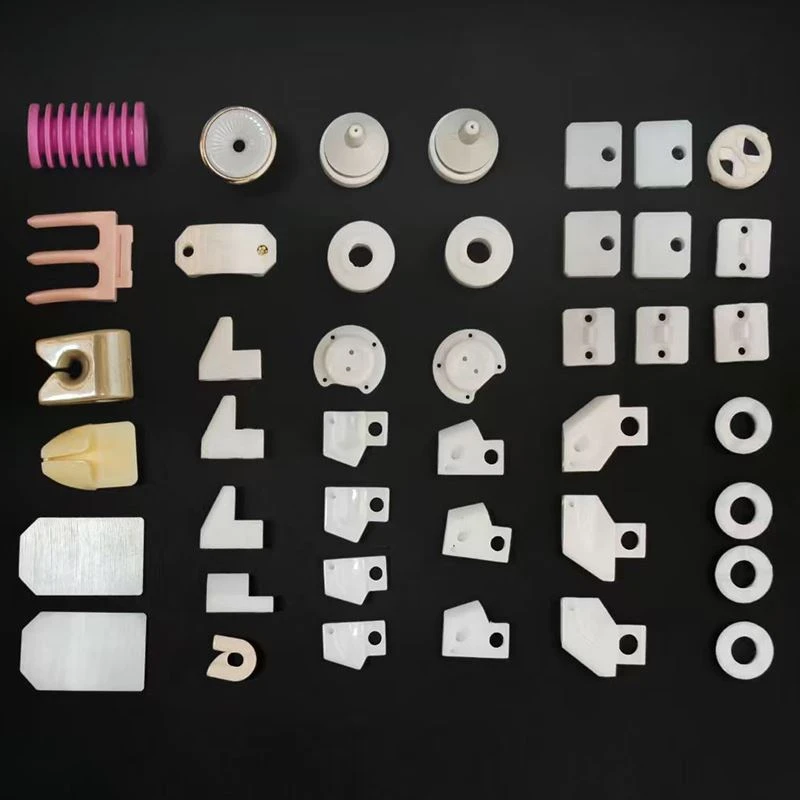
We'll start by analyzing the design of the part. If there are any features that are difficult to achieve in terms of precision, we'll discuss alternative designs or manufacturing processes with the customer. For example, if a part has very thin walls, it may be more challenging to machine with high precision. In such cases, we might suggest a different material or a different manufacturing method to ensure that the precision requirements can be met.
We also keep our customers updated throughout the manufacturing process. We provide them with regular reports on the progress, including any test results and quality control checks. This transparency helps build trust and ensures that the final product meets the customer's expectations.
Conclusion
In conclusion, the precision levels achievable in industrial ceramic part manufacturing can vary widely depending on factors like the material, manufacturing processes, and quality control measures. For general applications, we can achieve tolerances in the range of ±0.1 mm to ±0.5 mm, while for high - precision applications, we can go down to ±0.01 mm or even lower.
If you're in the market for high - quality industrial ceramic parts and have specific precision requirements, don't hesitate to reach out. We're here to help you find the best solutions for your needs. Whether you need Wear Resistant Ceramic Parts, Heat Resistant Ceramic Parts, or any other type of industrial ceramic components, we've got you covered.
References
- "Ceramics in Industry: Properties and Applications" - A comprehensive guide on industrial ceramics.
- "Precision Manufacturing Techniques for Ceramics" - A research paper focusing on the precision aspects of ceramic part manufacturing.