

Zirconia ceramic components have emerged as a cornerstone in the optical industry, offering a unique blend of properties that are highly sought after in this high - tech field. As a supplier of Zirconia Ceramic Components, I am well - versed in the specific requirements that these components must meet to excel in the optical industry.
1. Optical Transparency
One of the primary requirements for zirconia ceramic components in the optical industry is optical transparency. In applications such as lenses, windows, and optical filters, the ability to transmit light with minimal loss is crucial. Zirconia ceramics can be engineered to have high transparency in specific wavelength ranges. For instance, in the infrared (IR) region, certain zirconia compositions can provide excellent transmission, making them suitable for IR optical systems.
The transparency of zirconia ceramics is influenced by several factors. The purity of the raw materials is of utmost importance. Impurities can scatter light, reducing the overall transparency of the component. During the manufacturing process, careful control of the grain size is also necessary. Smaller grain sizes generally lead to better transparency because they reduce light scattering at the grain boundaries. Advanced sintering techniques are employed to achieve the desired grain structure and density, which are essential for optimal optical performance.
2. Mechanical Strength and Toughness
Optical components often need to withstand mechanical stresses during handling, installation, and operation. Zirconia ceramics are known for their exceptional mechanical strength and toughness. Their high fracture toughness allows them to resist cracking and chipping, which is vital for maintaining the integrity of the optical surface.
In optical systems, components may be subject to vibrations, thermal cycling, and external impacts. The mechanical properties of zirconia ceramics ensure that they can endure these conditions without significant damage. For example, in high - precision optical instruments, the components need to maintain their shape and alignment under various mechanical loads. Zirconia's high strength and toughness make it a reliable choice for such applications.
Moreover, the ability to machine zirconia ceramics to high precision is also an advantage. This allows for the production of complex optical shapes, such as aspherical lenses, which require accurate machining to achieve the desired optical performance.
3. Thermal Stability
The optical industry often operates in environments with varying temperatures. Zirconia ceramic components must exhibit excellent thermal stability to maintain their optical and mechanical properties over a wide temperature range.
Thermal expansion coefficient is a critical parameter in this regard. A low and stable thermal expansion coefficient ensures that the component does not undergo significant dimensional changes with temperature variations. This is particularly important in optical systems where precise alignment and focusing are required. For example, in laser systems, any thermal expansion or contraction of the optical components can lead to misalignment and reduced laser performance.
Zirconia ceramics can be formulated to have a very low thermal expansion coefficient, making them suitable for use in high - temperature and thermally - cycling environments. Additionally, their high melting point and good thermal shock resistance allow them to withstand rapid temperature changes without cracking.
4. Chemical Resistance
Optical components may come into contact with various chemicals during manufacturing, cleaning, and operation. Zirconia ceramics offer excellent chemical resistance, protecting them from corrosion and degradation.
In the optical industry, components are often cleaned using solvents and detergents. Zirconia's resistance to these chemicals ensures that the optical surface remains clean and free from damage. It also allows for the use of zirconia components in harsh chemical environments, such as in some chemical analysis optical instruments.
The chemical stability of zirconia ceramics is due to their strong atomic bonds and dense crystal structure. This makes them resistant to a wide range of acids, bases, and organic solvents, ensuring long - term reliability in optical applications.
5. Surface Finish and Precision
The surface finish of zirconia ceramic components is crucial for their optical performance. A smooth and defect - free surface is required to minimize light scattering and ensure accurate light transmission.
In the production of optical lenses and mirrors, the surface roughness must be controlled to extremely low levels. Advanced polishing techniques are used to achieve the required surface finish. The precision of the component's shape and dimensions is also essential. Optical components need to be manufactured with high accuracy to meet the strict requirements of optical systems.
For example, in the production of Precision Ceramic Parts for optical applications, tight tolerances are maintained to ensure proper alignment and focusing. Computer - controlled machining and metrology techniques are employed to guarantee the precision of the components.
6. Compatibility with Other Materials
In many optical systems, zirconia ceramic components need to be integrated with other materials, such as metals, polymers, and other ceramics. Compatibility with these materials is an important requirement.
Thermal and mechanical compatibility is crucial to prevent issues such as stress cracking and delamination. For example, when bonding a zirconia ceramic component to a metal part, the difference in thermal expansion coefficients between the two materials must be carefully considered. If the difference is too large, thermal stresses can develop during temperature changes, leading to failure of the joint.
Chemical compatibility is also necessary to ensure that the materials do not react with each other. This is particularly important in applications where the components are in direct contact with each other or are exposed to the same chemical environment.
7. Customization and Design Flexibility
The optical industry has diverse and ever - evolving requirements. As a supplier of zirconia ceramic components, we understand the need for customization and design flexibility.
We can work closely with our customers to develop components that meet their specific optical, mechanical, and thermal requirements. Whether it is a unique shape, a specific optical property, or a particular size, we have the expertise and capabilities to produce customized zirconia ceramic components.
Our design and manufacturing processes allow for the creation of complex geometries and the incorporation of special features. This flexibility enables us to provide solutions for a wide range of optical applications, from consumer electronics to high - end scientific instruments.
Conclusion
In conclusion, zirconia ceramic components play a vital role in the optical industry, and they must meet a variety of requirements to be effective. These requirements include optical transparency, mechanical strength and toughness, thermal stability, chemical resistance, surface finish and precision, compatibility with other materials, and customization and design flexibility.
As a leading supplier of Zirconia Ceramic Components, we are committed to providing high - quality products that meet these demanding requirements. Our team of experts is dedicated to continuous research and development to improve the performance of our zirconia ceramic components and to meet the evolving needs of the optical industry.
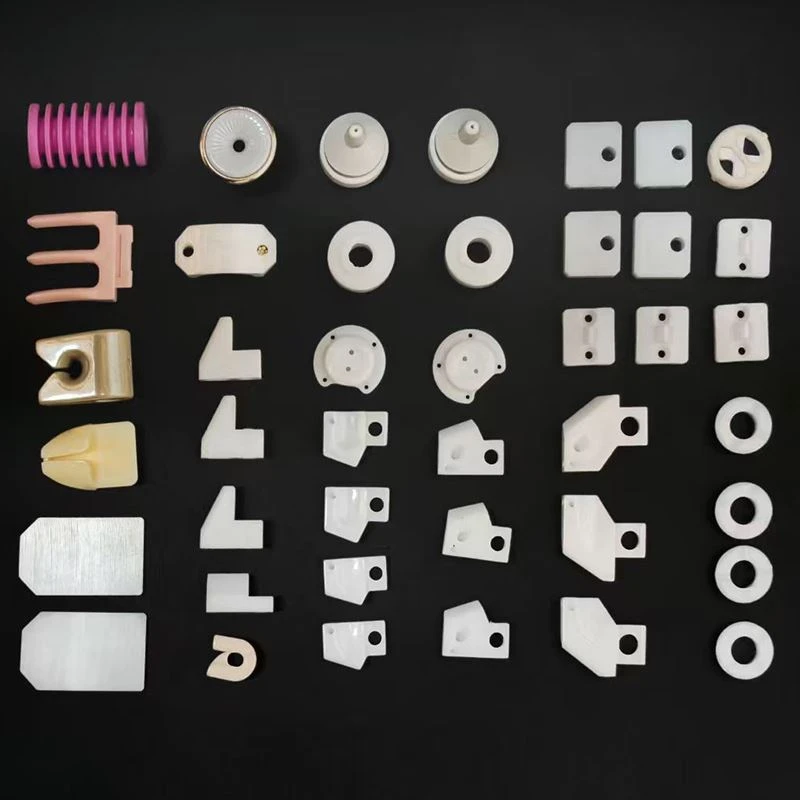

If you are in the optical industry and are looking for reliable zirconia ceramic components, we invite you to contact us for a detailed discussion about your specific requirements. We are ready to work with you to provide the best solutions for your optical applications.
References
- "Ceramics for Optical Applications", Journal of Optical Materials, Vol. XX, Issue XX, 20XX.
- "Mechanical and Thermal Properties of Zirconia Ceramics", International Journal of Ceramic Engineering, Vol. XX, Issue XX, 20XX.
- "Chemical Resistance of Zirconia in Optical Environments", Journal of Chemical Compatibility in Optics, Vol. XX, Issue XX, 20XX.