

Thermal conductivity is a crucial property when it comes to heat resistant ceramic parts. As a supplier of heat resistant ceramic parts, understanding this property is essential for both us and our customers. In this blog, we'll delve into what thermal conductivity means for heat resistant ceramic parts, its significance, and how it impacts the performance of these components.
Understanding Thermal Conductivity
Thermal conductivity, denoted by the symbol k, is a measure of a material's ability to conduct heat. It is defined as the quantity of heat, Q, that passes through a unit area, A, of a material in a unit time, t, when there is a unit temperature difference, ΔT, across a unit thickness, L, of the material. Mathematically, it can be expressed as:
[k=\frac{Q\times L}{A\times t\times\Delta T}]
The SI unit of thermal conductivity is watts per meter - kelvin (W/(m·K)). A high thermal conductivity means that the material can transfer heat quickly, while a low thermal conductivity indicates that the material is a good insulator and resists the flow of heat.
Thermal Conductivity of Heat Resistant Ceramic Parts
Heat resistant ceramic parts are known for their excellent thermal stability, which allows them to withstand high temperatures without significant degradation. However, their thermal conductivity can vary widely depending on the type of ceramic material, its composition, and the manufacturing process.
Common Types of Heat Resistant Ceramics and Their Thermal Conductivities
- Alumina Ceramics: Alumina (Al₂O₃) is one of the most widely used heat resistant ceramics. It has a relatively high thermal conductivity, typically ranging from 20 - 30 W/(m·K) at room temperature. This property makes alumina ceramics suitable for applications where heat dissipation is required, such as in electronic substrates and heat sinks.
- Zirconia Ceramics: Zirconia (ZrO₂) ceramics have a much lower thermal conductivity compared to alumina. The thermal conductivity of zirconia ceramics can be as low as 2 - 3 W/(m·K) at room temperature. This low thermal conductivity makes zirconia an excellent thermal insulator, and it is often used in applications where heat insulation is crucial, such as in thermal barrier coatings and high - temperature furnace linings. You can learn more about Zirconia Ceramic Components and Zirconia Ceramic Parts on our website.
- Silicon Carbide Ceramics: Silicon carbide (SiC) ceramics have a very high thermal conductivity, which can reach up to 200 - 400 W/(m·K) at room temperature. This high thermal conductivity, combined with its excellent mechanical and chemical properties, makes silicon carbide ceramics suitable for high - power electronic devices and heat exchangers.
Factors Affecting the Thermal Conductivity of Heat Resistant Ceramics
- Composition: The chemical composition of the ceramic material plays a significant role in determining its thermal conductivity. For example, adding certain dopants or impurities to the ceramic can alter its crystal structure and thus affect its thermal conductivity.
- Porosity: Porous ceramics have lower thermal conductivities compared to dense ceramics. This is because the pores act as barriers to heat transfer, reducing the overall thermal conductivity of the material.
- Temperature: The thermal conductivity of ceramics generally decreases with increasing temperature. This is due to the increased phonon scattering at higher temperatures, which reduces the efficiency of heat transfer.
Significance of Thermal Conductivity in Heat Resistant Ceramic Parts
The thermal conductivity of heat resistant ceramic parts has a profound impact on their performance and suitability for different applications.
Heat Dissipation Applications
In applications where heat dissipation is required, such as in electronic devices, high - thermal - conductivity ceramics are preferred. For example, alumina and silicon carbide ceramics are commonly used in electronic substrates and heat sinks to transfer heat away from the components and prevent overheating.
Heat Insulation Applications
In applications where heat insulation is needed, such as in furnaces and thermal barrier coatings, low - thermal - conductivity ceramics are the choice. Zirconia ceramics, with their low thermal conductivity, can effectively reduce heat loss and improve the energy efficiency of the system.
Thermal Shock Resistance
The thermal conductivity of a ceramic also affects its thermal shock resistance. Ceramics with high thermal conductivity can dissipate heat quickly, reducing the thermal stress within the material and thus improving its resistance to thermal shock. On the other hand, ceramics with low thermal conductivity may be more prone to thermal shock due to the slow heat transfer and the resulting large temperature gradients.
Our Offerings and the Role of Thermal Conductivity
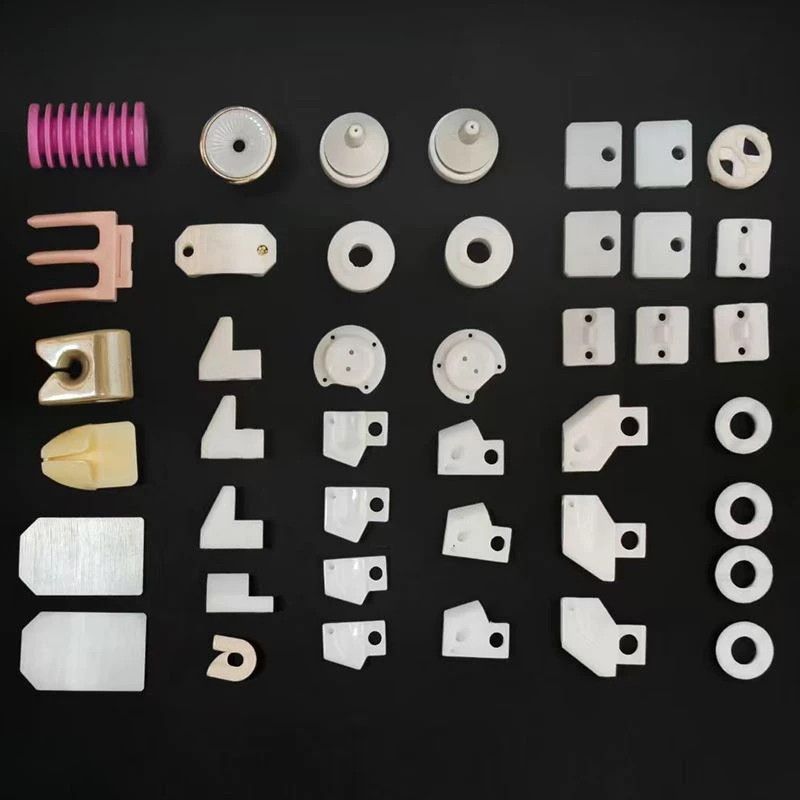
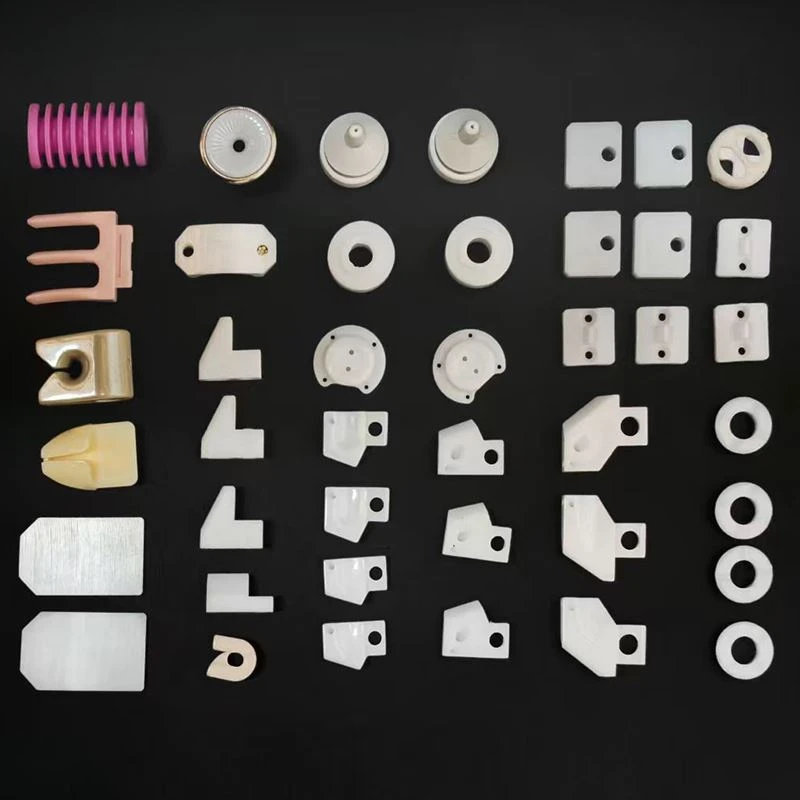
As a supplier of heat resistant ceramic parts, we offer a wide range of products made from different ceramic materials, each with its unique thermal conductivity properties. Our Precision Ceramic Components are carefully designed and manufactured to meet the specific requirements of our customers.
We understand that different applications have different thermal conductivity requirements. For customers who need components for heat dissipation, we can provide alumina or silicon carbide ceramic parts with high thermal conductivity. For those who require heat insulation, our zirconia ceramic parts with low thermal conductivity are an ideal choice.
Contact Us for Procurement
If you are in need of heat resistant ceramic parts and want to discuss the thermal conductivity requirements for your specific application, we encourage you to reach out to us. Our team of experts is ready to assist you in selecting the right ceramic material and components that meet your needs. Whether you are working on an electronic project, a high - temperature industrial application, or any other project that requires heat resistant ceramics, we can provide you with the best solutions.
References
- Callister, W. D., & Rethwisch, D. G. (2018). Materials Science and Engineering: An Introduction. Wiley.
- Kingery, W. D., Bowen, H. K., & Uhlmann, D. R. (1976). Introduction to Ceramics. Wiley.