

Surface roughness is a critical parameter in the manufacturing and application of Zirconia Ceramic Parts. As a supplier of these high - performance parts, understanding surface roughness is essential for ensuring product quality and meeting customer requirements.
What is Surface Roughness?
Surface roughness refers to the micro - irregularities on the surface of a material. It is a measure of the texture of the surface, which can have a significant impact on the part's functionality, durability, and aesthetic appearance. In the case of Zirconia Ceramic Parts, surface roughness is typically characterized by parameters such as Ra (arithmetical mean deviation of the profile), Rz (mean height of the profile irregularities), and Rq (root - mean - square deviation of the profile).
The Ra value is one of the most commonly used parameters to describe surface roughness. It represents the average deviation of the surface profile from the mean line over a specified sampling length. A lower Ra value indicates a smoother surface, while a higher Ra value means a rougher surface. For example, a Zirconia Ceramic Part with an Ra of 0.1 µm is much smoother than one with an Ra of 1 µm.
Importance of Surface Roughness in Zirconia Ceramic Parts
1. Functional Performance
The surface roughness of Zirconia Ceramic Parts can greatly affect their functional performance. In applications where the part needs to interact with other components, such as in mechanical seals or bearings, a smooth surface can reduce friction and wear. This is because a smoother surface has fewer asperities (peaks and valleys) that can cause abrasion. For instance, in a Zirconia Ceramic bearing, a low - roughness surface can improve the rotational efficiency and extend the service life of the bearing.
On the other hand, in some applications, a certain level of surface roughness may be required. For example, in dental implants made of Zirconia Ceramic, a rough surface can promote better osseointegration (the process by which the implant fuses with the surrounding bone). The micro - irregularities on the surface provide a larger surface area for the bone cells to attach and grow, enhancing the stability of the implant.
2. Aesthetic Appearance
The surface finish of Zirconia Ceramic Parts also plays an important role in their aesthetic appearance. In industries such as jewelry and consumer electronics, where the visual appeal of the product is crucial, a smooth and polished surface is often preferred. A high - quality surface finish can give the part a more luxurious and professional look.
3. Chemical Resistance
Surface roughness can influence the chemical resistance of Zirconia Ceramic Parts. A rough surface has more crevices and pores where corrosive substances can accumulate, increasing the risk of chemical attack. A smooth surface, on the other hand, is less likely to trap chemicals and is therefore more resistant to corrosion.
Factors Affecting the Surface Roughness of Zirconia Ceramic Parts
1. Manufacturing Processes
The manufacturing processes used to produce Zirconia Ceramic Parts have a significant impact on their surface roughness. For example, in the machining process, the cutting tools, cutting parameters (such as cutting speed, feed rate, and depth of cut), and the type of machining operation (e.g., turning, milling, grinding) can all affect the surface finish.
Grinding is a common process for achieving a smooth surface on Zirconia Ceramic Parts. By using fine - grit grinding wheels and appropriate grinding parameters, a very low surface roughness can be obtained. However, if the grinding process is not properly controlled, it can also introduce surface defects and increase the roughness.
2. Material Properties
The properties of the Zirconia Ceramic material itself can also influence the surface roughness. The grain size of the ceramic, its hardness, and its brittleness can all affect how the material responds to machining and finishing processes. For example, a ceramic with a larger grain size may be more difficult to machine to a smooth surface compared to a ceramic with a smaller grain size.
3. Post - processing Treatments
Post - processing treatments such as polishing can significantly reduce the surface roughness of Zirconia Ceramic Parts. Polishing involves using abrasive materials and a polishing agent to remove the surface irregularities and create a smooth finish. Different polishing methods, such as mechanical polishing, chemical - mechanical polishing (CMP), and electropolishing, can be used depending on the specific requirements of the part.
Measuring Surface Roughness of Zirconia Ceramic Parts
There are several methods available for measuring the surface roughness of Zirconia Ceramic Parts.
1. Contact - type Profilometers
Contact - type profilometers work by dragging a stylus across the surface of the part. The vertical movement of the stylus is recorded as it traverses the surface, and the data is used to calculate the surface roughness parameters. This method is accurate and can provide detailed information about the surface profile, but it can also cause damage to the surface of the part, especially if the part is very brittle.
2. Non - contact Profilometers
Non - contact profilometers, such as optical profilometers, use light or other non - contact methods to measure the surface topography. These methods are non - destructive and can be used to measure the surface roughness of delicate parts. They are also capable of measuring large areas of the surface quickly and accurately.
Applications of Zirconia Ceramic Parts with Different Surface Roughness
1. High - Precision Applications
In high - precision applications such as Precision Ceramic Parts, where tight tolerances and smooth surfaces are required, Zirconia Ceramic Parts with a very low surface roughness are used. For example, in the semiconductor industry, Zirconia Ceramic parts are used in wafer handling equipment, where a smooth surface is necessary to prevent damage to the wafers.
2. Wear - Resistant Applications
In applications where wear resistance is important, such as in Industrial Ceramic Parts, Zirconia Ceramic Parts with a moderate surface roughness may be preferred. A slightly rough surface can help to retain lubricants, reducing friction and wear. For example, in Zirconia Ceramic cutting tools, a certain level of surface roughness can improve the chip - evacuation ability and enhance the cutting performance.
3. Biomedical Applications
In biomedical applications, such as dental and orthopedic implants, the surface roughness of Zirconia Ceramic Parts is carefully controlled to promote osseointegration. As mentioned earlier, a rough surface can provide a better environment for bone cell attachment and growth.
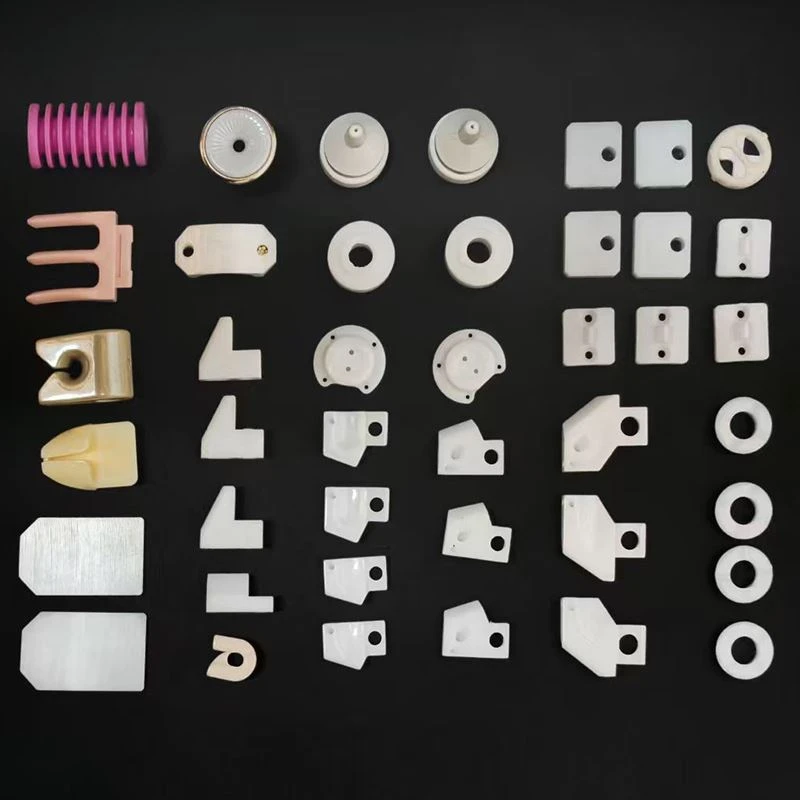

Our Capabilities as a Zirconia Ceramic Parts Supplier
As a supplier of Zirconia Ceramic Parts, we have extensive experience in controlling the surface roughness of our products. We use advanced manufacturing processes and state - of - the - art equipment to ensure that our Zirconia Ceramic Parts meet the highest quality standards.
We offer a wide range of surface finish options, from super - smooth polished surfaces for high - precision applications to controlled - roughness surfaces for specific functional requirements. Our team of experts can work closely with customers to understand their needs and provide customized solutions.
Contact Us for Your Zirconia Ceramic Parts Needs
If you are in need of high - quality Zirconia Ceramic Parts with specific surface roughness requirements, we invite you to contact us for a detailed discussion. Our sales team is ready to assist you in finding the best solutions for your applications. Whether you are looking for Industrial Ceramic Parts, Zirconia Ceramic Parts, or Precision Ceramic Parts, we have the expertise and resources to meet your demands.
References
- Smith, J. (2018). Surface Engineering of Ceramics. Journal of Ceramic Science, 25(3), 123 - 135.
- Johnson, R. (2019). The Role of Surface Roughness in Zirconia Ceramic Applications. Proceedings of the International Conference on Advanced Ceramics, 45 - 52.
- Brown, A. (2020). Measuring and Controlling Surface Roughness in Zirconia Ceramic Manufacturing. Manufacturing Technology Review, 12(2), 67 - 78.