

Automation ceramic parts play a crucial role in various industries, from robotics to textiles. As a dedicated supplier of automation ceramic parts, I am often asked about the materials used in creating these essential components. In this blog post, I will delve into the different materials commonly employed in the production of automation ceramic parts, highlighting their unique properties and applications.
Alumina Ceramics
Alumina ceramics, also known as aluminum oxide ceramics, are one of the most widely used materials for automation ceramic parts. They are composed of aluminum oxide (Al₂O₃) and are known for their high hardness, excellent wear resistance, and good electrical insulation properties. Alumina ceramics can be produced in different grades, with the purity of aluminum oxide ranging from 95% to 99.9%.
The high hardness of alumina ceramics makes them ideal for applications where wear resistance is crucial. For example, in Ceramic Parts for Robots, alumina ceramic components such as bearings, bushings, and guides can withstand the high stresses and friction associated with robotic movements. Their excellent electrical insulation properties also make them suitable for use in electrical and electronic applications, such as insulators and substrates.
Another advantage of alumina ceramics is their chemical stability. They are resistant to corrosion and can withstand harsh chemical environments, making them suitable for use in industries such as chemical processing and food processing. Additionally, alumina ceramics have a high melting point, which allows them to maintain their mechanical properties at high temperatures.
Zirconia Ceramics
Zirconia ceramics, or zirconium dioxide (ZrO₂) ceramics, are another popular choice for automation ceramic parts. They are known for their high strength, toughness, and excellent fracture resistance. Zirconia ceramics can be further classified into two main types: partially stabilized zirconia (PSZ) and fully stabilized zirconia (FSZ).
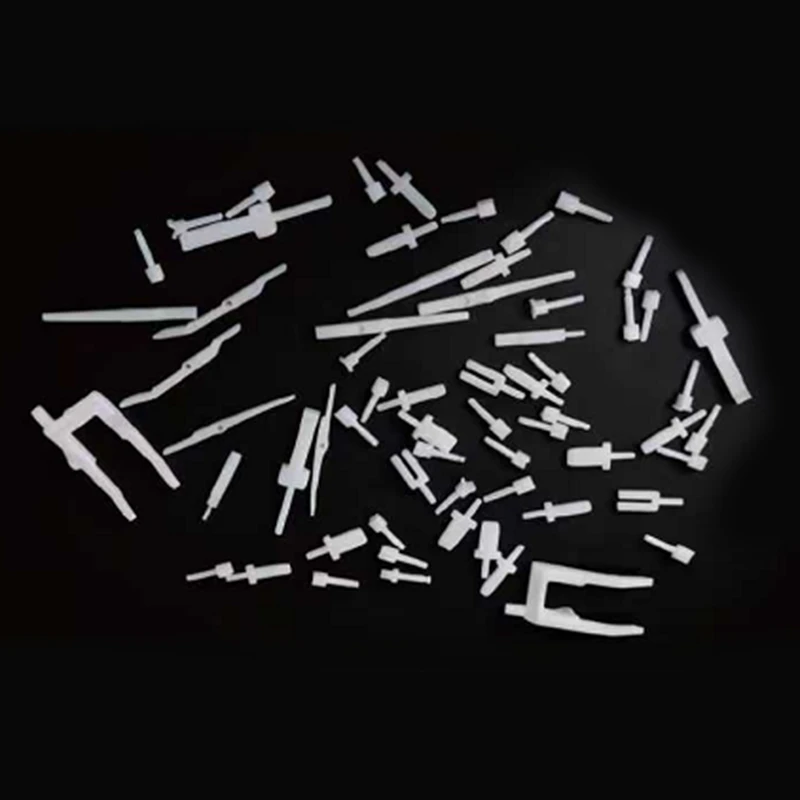
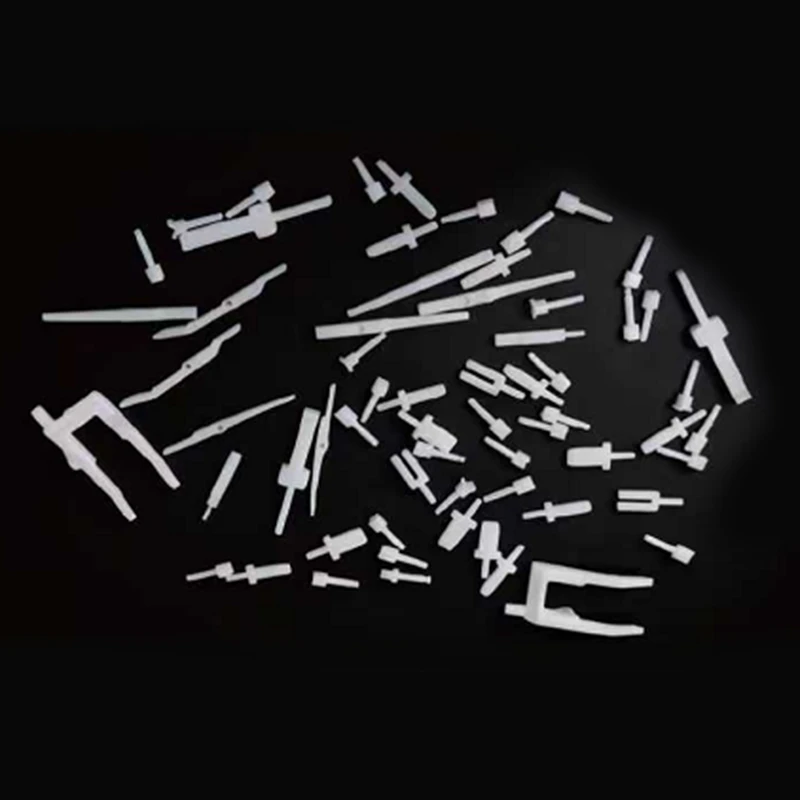
Partially stabilized zirconia contains a small amount of stabilizer, such as yttria (Y₂O₃), which helps to improve its toughness and fracture resistance. PSZ is commonly used in applications where high strength and toughness are required, such as cutting tools, dental implants, and engine components. Fully stabilized zirconia, on the other hand, contains a higher amount of stabilizer and has a more stable crystal structure. FSZ is often used in applications where high temperature stability and chemical resistance are needed, such as furnace linings and crucibles.
One of the unique properties of zirconia ceramics is their ability to undergo a phase transformation under stress. This phase transformation can absorb energy and prevent crack propagation, resulting in improved toughness and fracture resistance. This property makes zirconia ceramics particularly suitable for applications where impact resistance is crucial, such as in robotics and aerospace.
Silicon Carbide Ceramics
Silicon carbide (SiC) ceramics are known for their high thermal conductivity, excellent wear resistance, and good chemical stability. They are composed of silicon and carbon and can be produced in different forms, including sintered silicon carbide, reaction-bonded silicon carbide, and hot-pressed silicon carbide.
Silicon carbide ceramics have a high thermal conductivity, which allows them to dissipate heat quickly. This property makes them suitable for applications where heat management is crucial, such as in electronic devices and high-power electrical systems. Their excellent wear resistance also makes them ideal for use in applications where abrasive wear is a concern, such as in pumps, valves, and seals.
In addition to their thermal and wear properties, silicon carbide ceramics are also chemically stable and can withstand harsh chemical environments. They are resistant to oxidation, corrosion, and erosion, making them suitable for use in industries such as chemical processing, oil and gas, and aerospace.
Boron Nitride Ceramics
Boron nitride (BN) ceramics are a unique type of ceramic material that exhibits both high thermal conductivity and excellent electrical insulation properties. They are composed of boron and nitrogen and can be produced in different forms, including hexagonal boron nitride (h-BN) and cubic boron nitride (c-BN).
Hexagonal boron nitride has a layered structure similar to graphite, which gives it excellent lubricating properties. It is often used as a solid lubricant in applications where high temperatures and high pressures are involved, such as in metalworking and aerospace. Cubic boron nitride, on the other hand, has a diamond-like structure and is one of the hardest materials known. It is commonly used in cutting tools and abrasive applications.
Boron nitride ceramics also have a high thermal conductivity, which allows them to dissipate heat quickly. This property makes them suitable for use in applications where heat management is crucial, such as in electronic devices and high-power electrical systems. Their excellent electrical insulation properties also make them ideal for use in electrical and electronic applications, such as insulators and substrates.
Applications of Automation Ceramic Parts
The materials mentioned above are used to create a wide range of automation ceramic parts for various industries. Here are some examples of how these parts are used:
Robotics
In the field of robotics, automation ceramic parts are used in various components, such as bearings, bushings, guides, and sensors. Ceramic Parts for Robots offer high wear resistance, low friction, and excellent dimensional stability, which are essential for the smooth operation of robotic systems.
Textiles
In the textile industry, automation ceramic parts are used in applications such as Ceramic Yarn Guide and Textile Ceramic Yarn Guides. These parts are made from materials such as alumina and zirconia, which offer high wear resistance and smooth surface finish, ensuring the efficient and reliable operation of textile machinery.
Chemical Processing
In the chemical processing industry, automation ceramic parts are used in applications such as Ceramic Spray Nozzle and pumps. These parts are made from materials such as silicon carbide and alumina, which offer excellent chemical resistance and wear resistance, ensuring the long-term performance of chemical processing equipment.
Electrical and Electronic
In the electrical and electronic industry, automation ceramic parts are used in applications such as insulators, substrates, and sensors. These parts are made from materials such as alumina and boron nitride, which offer excellent electrical insulation properties and high thermal conductivity, ensuring the efficient and reliable operation of electrical and electronic devices.
Contact Us for Your Automation Ceramic Part Needs
If you are in need of high-quality automation ceramic parts, look no further. As a leading supplier of automation ceramic parts, we have the expertise and experience to provide you with the best solutions for your specific requirements. Our team of experts can help you select the right materials and design the most suitable parts for your applications.
Whether you are looking for Ceramic Parts for Robots, Ceramic Yarn Guide, Ceramic Spray Nozzle, Textile Ceramic Yarn Guides, or Textile Ceramic Parts, we can provide you with the highest quality products at competitive prices. Contact us today to discuss your needs and start a partnership that will benefit your business for years to come.
References
- "Ceramics: Structure, Properties, Processing, and Applications" by Richard E. Tressler, George L. Messing, and Charles G. Pantano
- "Handbook of Advanced Ceramics: Materials, Applications, Processing" edited by Jingyu Wang and Jun Chen
- "Introduction to Ceramics" by Walter D. Kingery, Henry K. Bowen, and David R. Uhlmann