

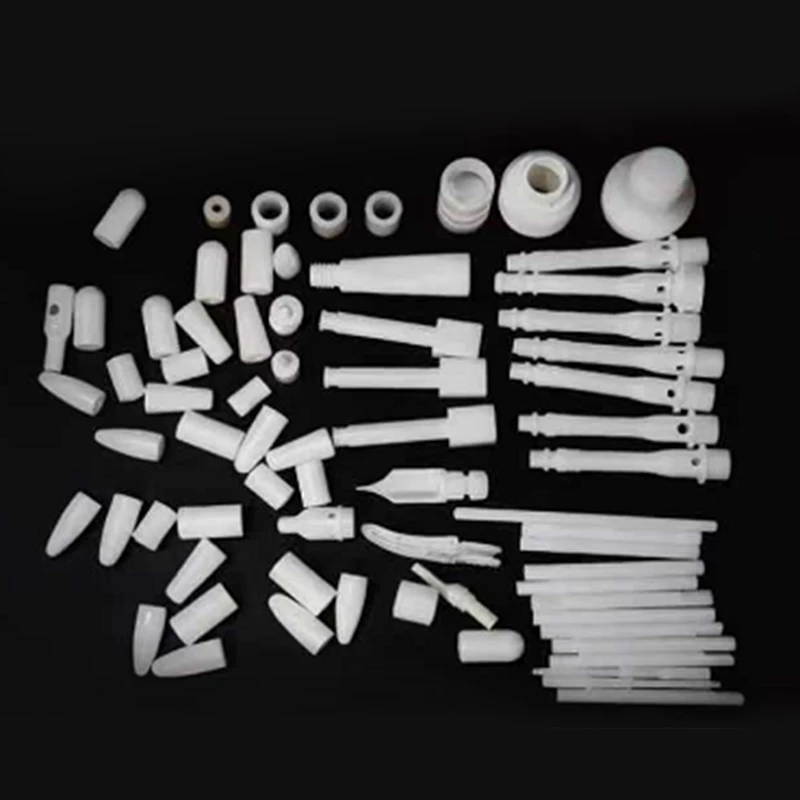
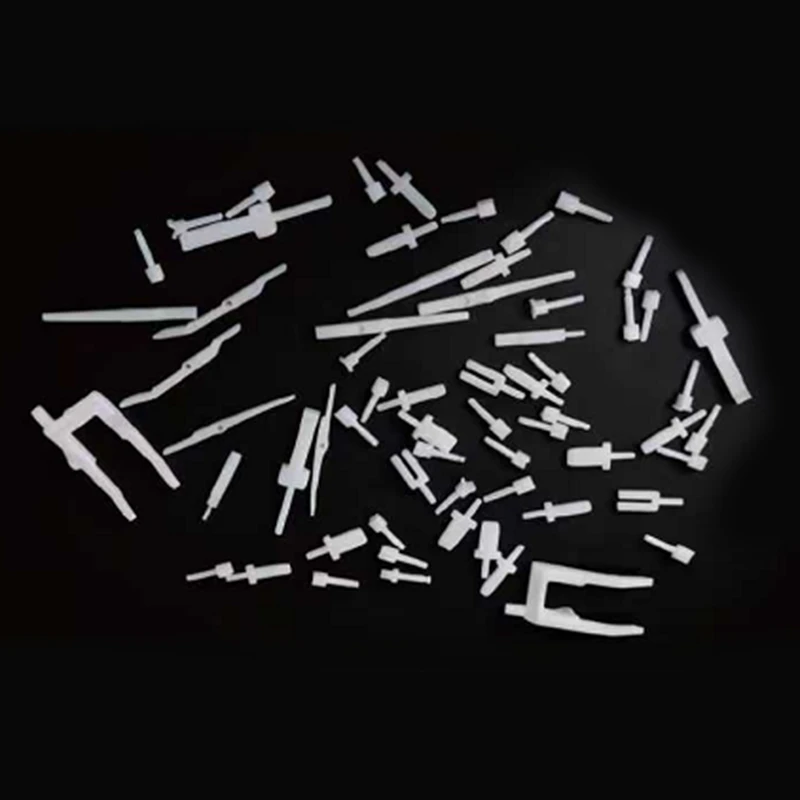
Ceramic parts for robots are precision zirconia components used for structural, wear, guide, insulating, and positioning functions inside robotic mechanisms. Applications include industrial robots, automated arms, intelligent handling systems, multi-joint robot assemblies, and precision transmission sections.
Core Advantages
1200-1400 HV Wear Surface
The zirconia material is specified at 1200-1400 HV hardness. In joints, guides, and other contact points that repeat the same sliding or reciprocating motion, the hard surface slows groove formation and wear at the working interface.
Electrical Insulation and Non-Magnetic Behavior
Zirconia is electrically insulating and non-magnetic. Near sensors, actuators, or isolated electrical sections, the ceramic part can act as a mechanical interface without introducing a conductive or magnetic path.
Low-Friction Contact in Repetitive Motion
Precision finishing gives guide and positioning surfaces a smooth contact area. On interfaces that cycle continuously, lower sliding resistance reduces local drag and avoids the metal-on-metal scoring associated with metallic contact pairs.
Customization
- Size Range
1-300 mm standard dimensional range; micro, irregular, and complex robot structures available.
- Part Geometry
Bushings, guides, joint elements, locating parts, and non-standard structural components produced to drawing or sample.
- Interface Machining
Bores, slots, locating faces, concentric features, and finished contact surfaces machined to the assembly definition.
Quality Control
Inspection is based on the functional interfaces shown on the released drawing or approved sample, not on appearance alone. Bores, locating faces, concentric features, and positioning surfaces are treated as the main measurement zones.
Finished contact areas are checked for cracks, chipping, edge damage, and surface defects. Assembly-critical dimensions use contact or optical measurement according to the feature geometry, and concentric or locating features are checked independently to catch offset interfaces.
Before packing, all finished robot parts are checked for released dimensions, visible condition, cleanliness, and accepted quantity. Records remain linked to the batch. Third-party inspection can be arranged when independent acceptance is required.
Product Parameters & Customization Details
|
Item |
Parameters & Customization Details |
|
Material Specification |
Standard 3Y yttria-stabilized zirconia; toughened robotic-grade ceramics available; customer-supplied materials supported |
|
Dimensions |
1mm–300mm standard range; micro, irregular, and complex joint structures customizable |
|
Performance Index |
Hardness 1200–1400HV; temperature resistance ≤1300°C; wear-resistant and corrosion-resistant; performance tuning available based on robotic applications |
|
Machining Accuracy |
Standard tolerance ±0.01mm; precision mating components up to ±0.002mm available |
|
Product Types |
Standard robotic ceramic components; supports non-standard structural parts and small-batch prototyping |
fAQ
Q: Can I order a prototype before mass production?
A: Yes. Prototype sampling is available; free samples are not provided before an order is placed.
Q: What is the production lead time?
A: Standard products are 48 days after sample approval; custom lead time depends on quantity and confirmation timing.
Q: How should clamp force be applied to a robot ceramic part?
A: Use broad, aligned contact surfaces and avoid point loading or uneven tightening.
Q: What should be checked before installing a ceramic part on a robot assembly?
A: Make sure the seating surface is clean, flat, aligned, and free from hard particles.
Hot Tags: ceramic parts for robots, China ceramic parts for robots manufacturers, suppliers, factory, Automation Ceramic Parts, Ceramic Parts For Robots, Ceramic Yarn Guide, industry ceramics, Textile Ceramic Parts, Textile Ceramic Yarn Guides


