

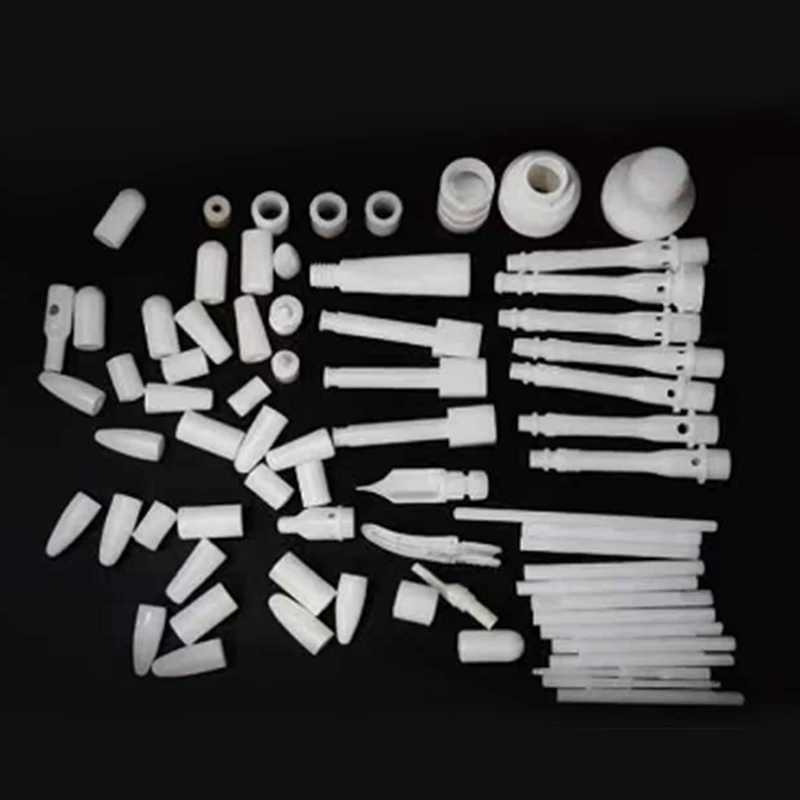
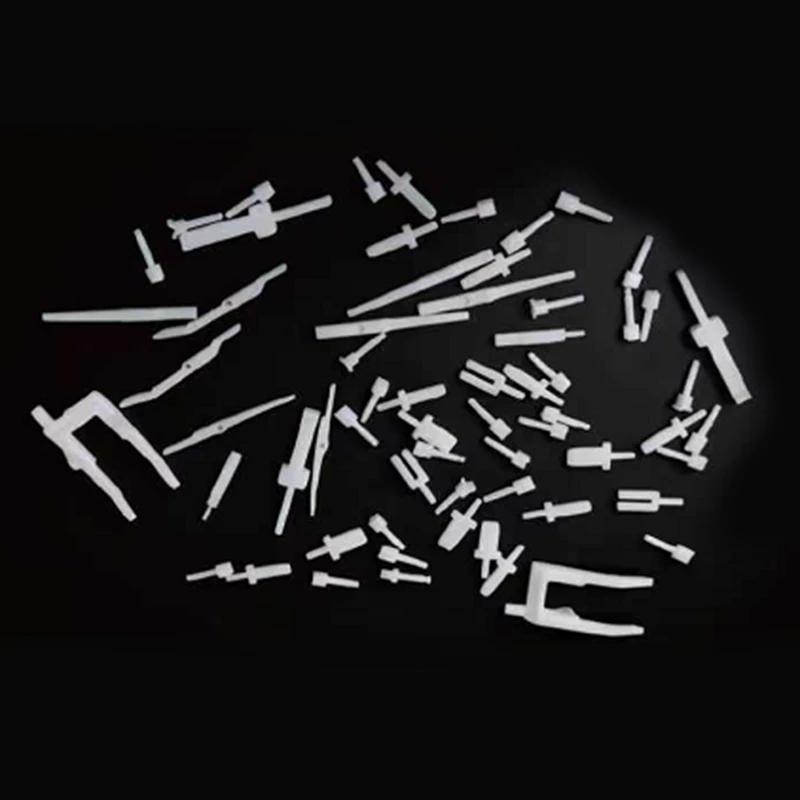
Automation ceramic parts are zirconia components used for wear, guiding, insulation, locating, and structural functions in automated equipment. They are applied in intelligent production lines, non-standard automation equipment, photovoltaic automation systems, precision conveying machinery, and industrial control assemblies.
Core Advantages
Wear Resistance in High-Cycle Motion
3Y zirconia gives guides, stops, wear pads, and other moving-contact parts a hard working surface. In equipment that repeats the same motion throughout a shift, groove wear develops more slowly at sliding and reciprocating contact points.
Electrical Insulation and Non-Magnetic Behavior
Zirconia is electrically insulating and non-magnetic. Around sensors, isolated electrical points, or control hardware, it can form a mechanical interface without adding a conductive or magnetic path.
Corrosion-Free Working Surface in Dusty or Humid Equipment
Humidity, process residue, and mild chemical contact do not cause zirconia to rust. In enclosed automation equipment where dust and moisture reach exposed parts, the working surface remains free of corrosion scale that could change contact or movement.
Customization
- Structure
Standard automation components plus micro, irregular, and complex non-standard structures.
- Precision Range
Standard tolerance +/-0.01 mm; selected assembly components up to +/-0.002 mm.
- Interface Features
Bores, slots, locating faces, insulating spacers, and mating surfaces produced from drawings or samples.
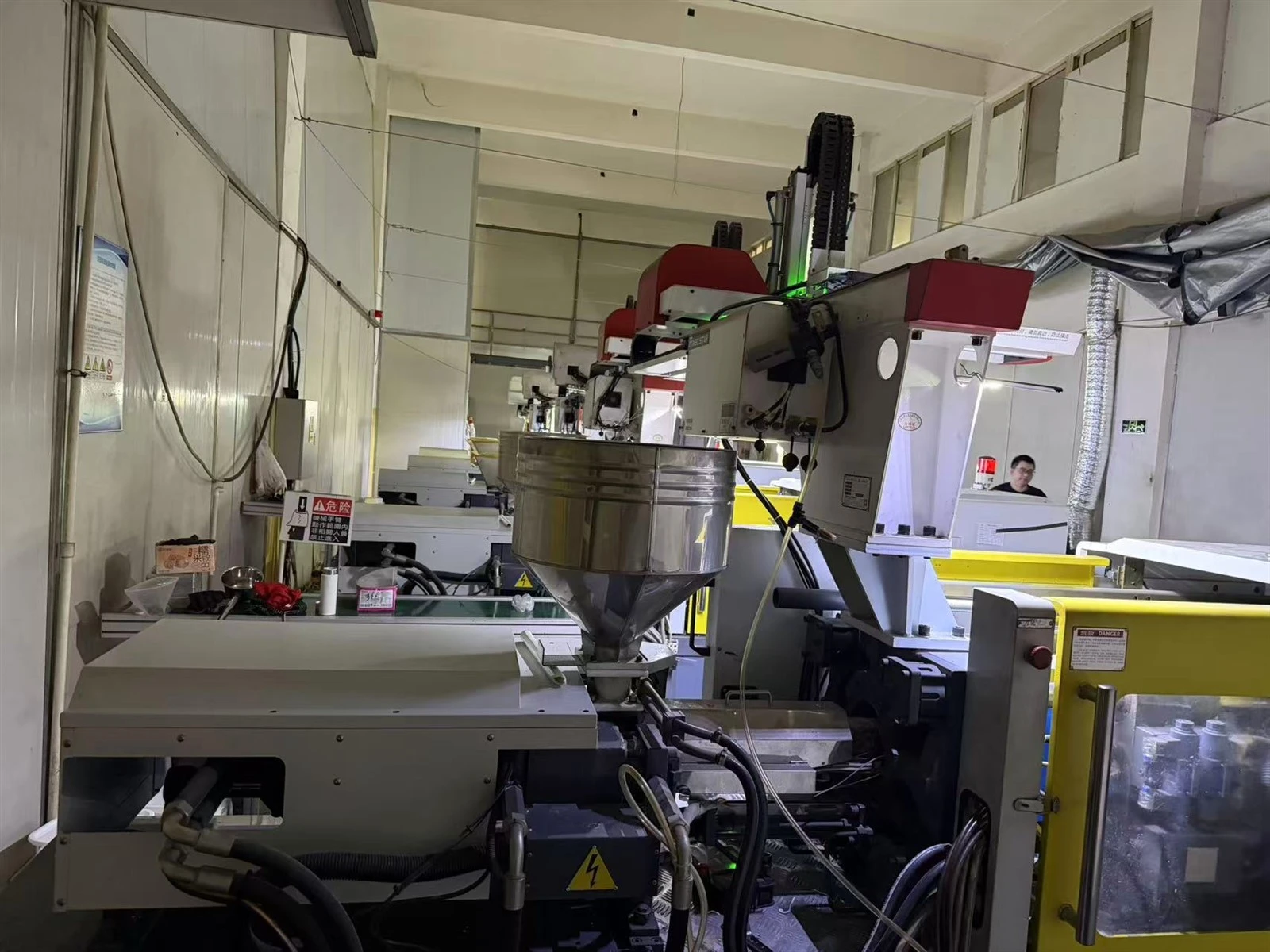
Quality Control
Inspection follows the part's function in the assembly. Wear faces, bores, slots, locating surfaces, and insulating sections are treated as separate control zones so fit and movement requirements can be checked directly.
Thin sections, hole edges, and finished contact areas are examined for cracks, chipping, and local damage. Dimensions that control position or motion are measured with calibrated contact or optical equipment selected for the feature geometry.
All finished parts are inspected before packing for released dimensions, visible condition, cleanliness, and accepted quantity. The records stay linked to the batch, and third-party inspection can be included when the order specifies it.
Product Parameters & Customization Details
|
Item |
Parameters & Customization Details |
|
Material Specification |
Standard 3Y zirconia ceramic; wear-resistant and corrosion-resistant ceramic options available |
|
Structural Design |
Mature production for standard automation components; micro, irregular, and complex structures can be customized |
|
Precision Grade |
Standard tolerance ±0.01mm; high-precision assembly components up to ±0.002mm available |
|
Performance Features |
Wear-resistant, insulating, corrosion-resistant, and thermally stable; performance tuning available based on automation conditions |
|
Production Mode |
Mass production of standard parts; supports small-batch prototyping and non-standard automation ceramic parts customization |
FAQ
Q: How are automation ceramic parts packaged?
A: Precision faces and ceramic parts are separated and protected according to geometry and shipment method.
Q: What is the production lead time?
A: Standard products are 48 days after sample approval; custom lead time depends on quantity and confirmation timing.
Q: How should clamp force be applied to an automation ceramic part?
A: Use broad, aligned contact surfaces and avoid point loading or uneven tightening.
Q: What should be checked before the part is seated in the machine?
A: Make sure the mounting surface is clean, flat, aligned, and free from hard particles.
Hot Tags: automation ceramic parts, China automation ceramic parts manufacturers, suppliers, factory, Automation Ceramic Parts, Ceramic Spray Nozzle, Ceramic Yarn Guide, industry ceramics, Robot Ceramic Joints, Textile Ceramic Parts


